
The 5 C's of Survival: What to Pack When You Have No Gear
You set the pack down for a photo, the canoe tips, or you take the wrong fork where two trails look identical. Now the knife, the lighter, the filter and the map are somewhere behind you, and it is getting dark sooner than you planned.
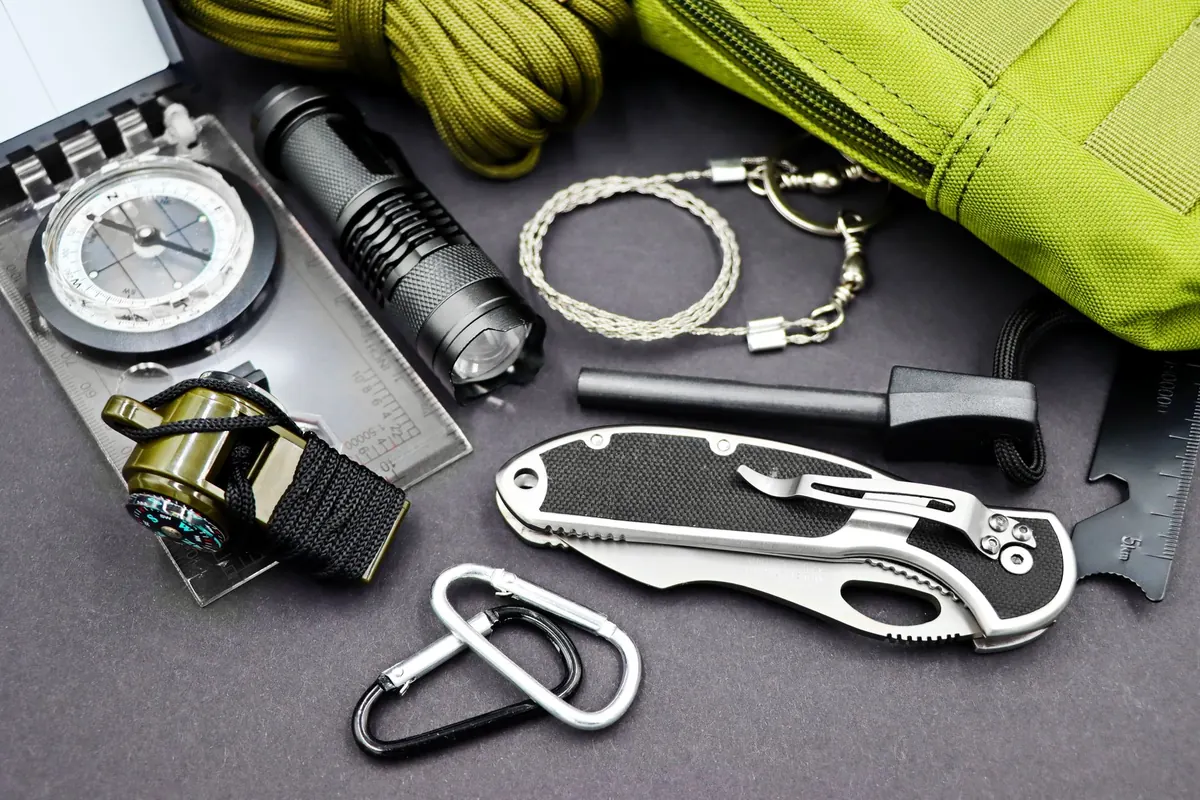
The five C's are a classic way to organize survival priorities: cutting tool, combustion, cover, container, cordage. The list isn't about gear you buy. It's about five jobs that have to get done, and there are usually three or four ways to do each one with nothing but what's already around you.
Why these five, and why the order bends
Each C solves a problem that turns dangerous quickly. A cutting tool lets you process wood, open a shelter, and make fire material. Combustion gives you warmth, drinkable water, and a signal. Cover keeps wind and rain off you, which is the fastest route to hypothermia. A container lets you carry and boil water. Cordage holds the other four together.
The order shifts with conditions. Wet and windy at 40 degrees? Cover comes first, fire second. Hot and dry with no water for miles? Container beats everything. Ask yourself which problem will hurt you in the next two hours, then work on that one.
Cutting: the tool that multiplies your hands
Any sharp edge is a cutting tool. Look for:
- Stone. Flint, chert, obsidian and quartzite break into edges that will cut cord, skin a rabbit, or shave tinder. Strike a flake off by hitting the stone against another rock with a glancing blow, then use the thin edge.
- Glass and metal. Car window glass, a broken bottle base, a flattened can lid, a piece of sheet metal from a wrecked vehicle. A can lid folded in half and rubbed on concrete turns into a surprisingly serviceable blade.
- Leverage instead of blades. You don't need an axe to break dead branches. Wedge a limb between two trees and bend; step on a low branch and pull up. Green wood splits along the grain if you cut notches and pound a wedge in.
Cut away from your body, keep your free hand behind the edge, and never force a dull tool. Most improvised-cut injuries happen in the first five minutes of enthusiasm.
Combustion: fire without a lighter
Find a spark
Check the obvious first: a glovebox lighter, a rental car's 12V socket, a roadside flare, matches in a first aid kit. Then the less obvious. A battery and a strand of fine steel wool will light if you bridge the terminals. If you have carbon steel — a file, a saw blade, the spine of a cheap knife — strike it against a sharp chert or flint edge and catch the spark in charred cloth or very fine tinder.
Feed it properly
Fire fails because of the material, not the spark. Build three piles before you strike anything:
- Tinder that catches from a spark: shredded inner bark of cedar or juniper, dry grass tops, cattail fluff, pine resin, birch bark scraped into fibers, lint from your pockets.
- Kindling the thickness of a pencil, broken into short pieces.
- Fuel from thumb-thick up to wrist-thick, including some dead standing wood, which burns hotter than anything off the ground.
Friction methods — bow drill, hand drill, fire plow — work, but they need dry, matched materials and hours of practice before you're cold and scared. Learn one at home, in the yard, on a nice day.
Cover: shelter that actually keeps heat in
Wind and wet ground pull heat out of you faster than cold air does. Two rules cover most situations: get off the ground, and get out of the wind.
Pile dry leaves, pine boughs, ferns, cattail down, or your own spare clothing into a mattress at least a hand-span thick. Then build upward. A ridgepole between two trees with branches leaned against it, roofed with debris, bark slabs, a poncho, a trash bag, or a car floor mat, will hold heat better than a fancy tent with no insulation under it. In deep snow, a quinzhee — a mound you hollow out — is more forgiving than a snow cave, but only build one if you've practiced and can stay dry digging.
Stay dry, stay warm
Sweat is your enemy in cold weather. Work in bursts, vent layers, and change out of wet base layers before you sleep. If someone is shivering hard, confused, or slurring words, treat it as a medical emergency and get help moving as soon as you can — improvised shelter is a stopgap, not a substitute for care.
Container: carrying and cleaning water
You can live days without food and about three without water. Without a bottle, you need something that holds liquid: a plastic bag, a ziplock, a condom, a length of clean tubing, a birch bark cone folded and pinned with a twig, a hollowed log, a wide green leaf curled into a cup.
Boiling is the most reliable way to make questionable water safer, and it doesn't need metal. Heated stones dropped into a wooden bowl, a bark vessel, or a pit lined with clay will bring water to a rolling boil. Never use wet river rocks — they can crack and throw steam and fragments. Hold the boil for a minute or so, then let it cool. Filters and chemical tablets are better if you have them; a bandana strain out grit but not much else.
If you develop vomiting, diarrhea, or fever after drinking untreated water, get medical attention rather than guessing at treatment.
Cordage: the quiet workhorse
Cordage ties shelters, secures splints, repairs boots, sets snares, and hangs food out of reach. Before you cut anything, check what you're already wearing: shoelaces, paracord bracelets, drawstrings, belt, pack straps, tape, wire from a fence, zip ties on a tarp.
For natural cord, harvest inner bark from cedar, willow, basswood, or dead nettle stalks. Split it into thin strips, twist each strip tight, then twist two strands together in the opposite direction — the reverse wrap. Grass, cattail leaves, and thin roots braid the same way. Braided is stronger than twisted; three strands beat two. Test every length by hanging your full body weight before you trust it over a ravine or under a person.
Build the habit before you need it
None of this works the first time you try it, cold and in the dark. So practice small. On your next hike, spend twenty minutes making a fire with only what you find on the ground. Build a debris shelter in the yard and sleep in it once. Carry a knife, a lighter in a plastic bag, a metal water bottle, and fifteen feet of cord in your pockets, not just your pack — a pocket kit is the one thing that doesn't get separated from you.
Then, if it happens: stop early, stay put if people know where you are, and work the list. Cover and fire before dark. Water before thirst turns into a headache. Signal with three of anything — three whistle blasts, three fires, three flashes. The five C's aren't a gear list. They're a sequence of decisions, and you can start making them with empty hands.
Photo: Marta Branco / Pexels