Hiking in Shoulder Season: How to Handle Mud, Snow, and Ice Safely
A trail in late March is a different animal than the same trail in July. The crowds are gone, the woods are quiet, and the ground has opinions — frozen solid at dawn, bottomless by noon, slick as wet tile once the sun drops behind the ridge. Shoulder season rewards hikers who plan for that mess and punishes the ones who pack for summer and hope for the best.
What Shoulder Season Does to a Trail
The core problem is the freeze-thaw cycle. Water melts during the day, soaks into the soil, then refreezes overnight. Repeat that for a few weeks and you get ground that never quite firms up, plus a fresh glaze of ice on every shaded stretch. On higher routes, you get the same process in snow: a crust strong enough to hold you at 7 a.m. and rotten enough to swallow a leg by 2 p.m.
That creates hazards that don't exist in summer. Postholes — where a boot punches through crust into soft snow underneath — are the classic source of twisted knees and tweaked ankles. Water crossings run higher and faster from snowmelt. And ice hides in places you don't expect it: under a thin dusting of fresh snow, beneath mud, in the shaded ruts of an old logging road, on wooden bridges and boardwalks that stay damp all day.
Read the Forecast and the Freezing Line
Daytime highs tell you very little in shoulder season. What matters more is the overnight low, the elevation where the freezing line sits, and whether the sun will actually reach the trail. A trail on a north-facing slope can hold snow for weeks after a south-facing neighbor is bare.
- Check the low, not just the high. A day that climbs to 45°F after a 25°F night means hard ice in the morning and slop by afternoon.
- Look at the elevation. Snow lingers a thousand feet higher than the trailhead. Plan for the top of the hike, not the parking lot.
- Check recent conditions. Local land management agencies, trail associations, and volunteer groups often post current trail reports and closures. Five minutes of reading can save a wasted drive.
- Respect closures. Some trails shut down in mud season specifically because hiking them does lasting damage.
Footwear: Dry Feet Are Warm Feet
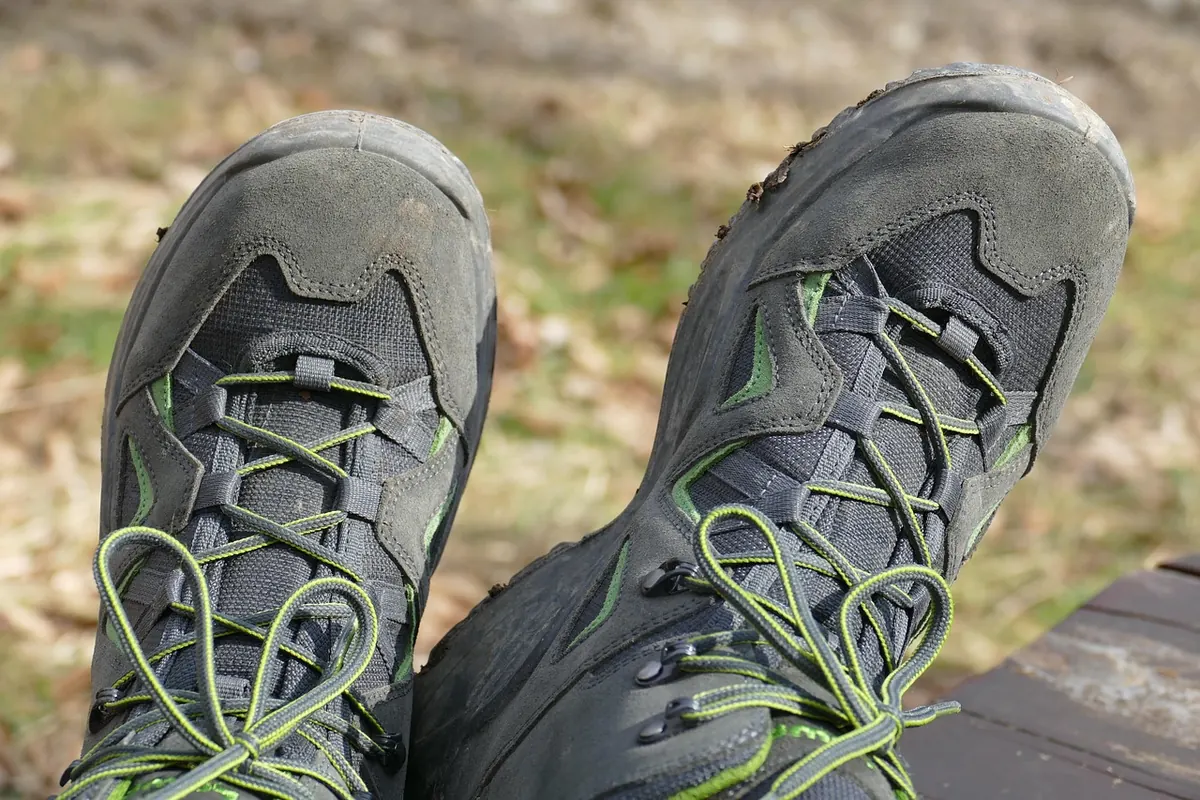
There's a real trade-off here. Waterproof boots keep shallow slush and puddles out, and they're the better call if you'll be standing in snow or walking through wet brush. But waterproofing has a ceiling: once water comes over the collar, a waterproof boot becomes a bucket. It holds the water in and takes forever to dry.
Well-draining trail runners do the opposite. They get soaked fast and dry fast, which is often the smarter choice for a muddy low-elevation hike where you'll be crossing water repeatedly. Whichever you pick, wear wool or synthetic socks — never cotton — and pack a spare pair in a dry bag. Changing socks mid-hike at the turnaround point is a small ritual that keeps your feet functional and your mood intact.
Gaiters earn their place in shoulder season. A short pair keeps mud, slush, and small snow spills out of your boots, and they protect your pant cuffs from the wet slap of overgrown trail.
Traction: Match the Tool to the Surface
Traction devices are not interchangeable, and using the wrong one is worse than using none, because it gives you false confidence. Think about what you're actually walking on.
- Microspikes or light traction: Best for packed snow and hard ice on rolling or moderately steep terrain. Easy to walk in, easy to pack.
- Mountaineering crampons: For steep, hard snow and ice where a slip means a slide. They need stiff-soled boots and, honestly, some instruction before you trust them on a real slope.
- Snowshoes: For deep, soft snow where you're sinking past your ankles. They don't help on ice.
- Trekking poles: Not traction, but they add two more contact points and take load off your knees on sloppy descents.
Carry your traction in an outside pocket, not buried at the bottom of your pack. You'll want it on the first icy switchback, and you won't want to dig for it with cold hands.
Timing: Frozen Mornings, Rotten Afternoons
The single most useful shoulder-season habit is hiking the frozen half of the day. On many trails that means an early start, walking while the ground is still firm and the snow still supportive, and being back at the car before the afternoon thaw turns everything to soup.
That said, timing is local. In deep spring snowpack, a later start can be safer than a dawn start, because you want the surface softened just enough to grip instead of bulletproof ice. The principle is the same either way: know which state the surface is in, and don't get caught in the wrong one above a slope you'd rather not slide down.
Mud Etiquette and Moving Well
When you hit a muddy stretch, walk through the middle of it. Walking around the edges widens the trail and chews up the vegetation that holds the soil together — that's how a single-track path becomes a fifty-foot mud scar over one season. Wear boots you don't mind dirtying and step straight through.
On ice, shorten your stride and keep your weight centered over your feet. Small, flat steps beat long, confident ones. Avoid leaning back on descents, which is the instinct that puts people on the ground. And if you're using poles, shorten them on climbs and lengthen them on descents so your arms do real work.
Turnaround Discipline and the Cold-Wet Problem
Cold plus wet is the combination that ends hikes early and sometimes badly. Wet clothing pulls heat out of you fast, and shoulder-season afternoons cool down quicker than anyone expects. Carry a dry insulating layer and a windproof shell, keep them in a waterproof bag, and put the dry layer on before you start shivering, not after.
Set a turnaround time and stick to it. Daylight is short in shoulder season, and a trail that took you two hours up in firm morning conditions can take three hours down in slop and fading light. Tell someone where you're going and when you expect to be back. Know the signs of hypothermia — uncontrolled shivering, confusion, clumsiness — and if they show up in yourself or a partner, get dry, get warm, and seek medical help rather than pushing on.
Pack for the Mess, Then Enjoy the Quiet
A short shoulder-season kit looks a lot like a winter kit, just lighter: traction devices, trekking poles, gaiters, a dry spare layer, spare socks, gloves, a headlamp, a small emergency blanket, and a map you can read without a screen. Add a trash bag for muddy gear so your car survives the drive home.
Do that, and shoulder season stops being a gamble. You get empty trails, long views through leafless trees, and that particular quiet that only exists between the seasons — mud and all.
Photo: Boke9a / Pixabay