Leave No Trace Camping: 7 Rules Every Camper Should Know
A fire ring built from river stones. A cairn stacked at a junction that never needed marking. A patch of bare, packed dirt where dozens of tents have sat before yours. None of that is vandalism exactly—it's the slow accumulation of small choices, and the difference between a campsite that recovers in a season and one that stays scarred for years comes down to a few habits.
Leave No Trace is not a list of things you can't do. It's a way of deciding where to put your feet, your tent, your food and your fire so the next person—and the animals that live there—find the place roughly as you did. Here's what the seven principles look like at an actual campsite.
1. Plan Ahead and Prepare
Most damage happens when people are improvising. You roll in at dusk, the campground is full, and that flat grassy strip by the water suddenly looks acceptable. It isn't. By morning it's mud and ruts.
So the first principle is unglamorous logistics. Check whether the area needs a permit or has group size limits, read the fire restrictions before you pack an axe, and know where the toilets and water sources are. Bring gear you trust so you aren't forced into a bad call after dark. Repackaging food at home helps too: strip the cardboard, cans and foil, then portion meals into reusable bags so there's less trash to carry back out.
2. Camp and Walk on Durable Ground
Some ground forgives; some doesn't. Rock, gravel, sand, dry grass and snow handle feet and tent poles. Alpine tundra, wet meadows, desert soil crusts and lakeshores take years to recover from one careless night.
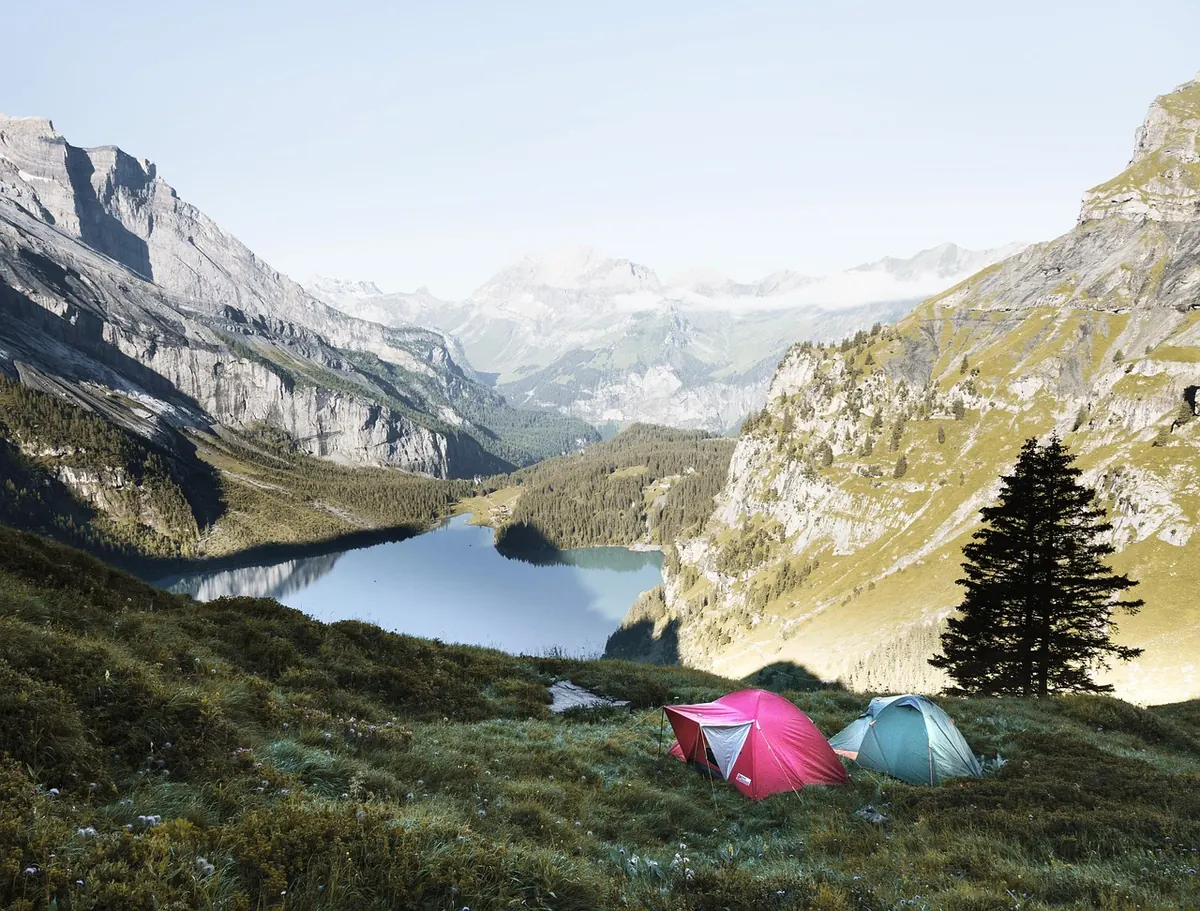
In popular areas, use an existing site and keep the impact concentrated there. Skipping the obvious campsite to pitch on untouched grass spreads damage instead of avoiding it. In remote areas with no established sites, spread out and choose surfaces that will bounce back. Walk on trails even when they're muddy, and don't cut switchbacks—the braided social trails that form are what turn one path into a scar. In pristine country, stay about 200 feet (roughly 70 adult paces) from lakes and streams. Skip the trench around your tent; a good pitch and a tarp handle drainage without rearranging soil.
3. Pack Out Everything You Bring
This is the principle people break most often, usually without meaning to. "It's biodegradable" isn't a reason to leave it—an orange peel dropped at a viewpoint can take a long time to break down and looks like trash to everyone after you.
Before you leave camp, scan the ground the way you'd scan it if you'd lost your keys. Commonly missed items:
- Orange peels, apple cores and nut shells
- Tea bags, coffee grounds and eggshells
- Foil, wrappers and bottle caps
- Cigarette butts
- Fishing line, hooks and bait containers
- Used toilet paper and hygiene products
- Micro-trash: crumbs, broken straps, stray bits of plastic
Human waste deserves a straight answer. Use the pit toilet when one exists, even if it's a walk. Where none exists and rules allow, dig a cathole six to eight inches deep at least 200 feet from water, trails and camp, then cover it. In desert, alpine and river settings that doesn't work—pack it out in a wag bag, which many land managers now require.
4. Protect Water at Camp, Not Just on the Trail
Dishes and gray water
Carry water at least 200 feet from any lake, stream or spring and wash there, not at the bank. Soap is soap, including biodegradable soap, and it still affects aquatic life. Use as little as you can, strain the food bits out, pack the strainings with your trash, and scatter the rinse water over a wide area.
Bathing and everything else
Keep soap and shampoo out of the water; rinse off with carried water away from the bank. The same goes for toothpaste, spilled fuel, fish guts and dishwater. Nothing gets rinsed directly into a stream because it "dilutes."
5. Keep Fires Small, or Skip Them
A campfire is one of the best parts of camping and one of the most damaging when it's careless. Blackened rock rings, half-burned logs and scattered charcoal pile up at site after site.
Use an existing ring when there is one, keep the fire small enough to cook over, and burn only dead and downed wood you find on the ground. Leave standing trees and fallen logs alone—both are habitat. Buy firewood where you burn it; hauling wood from home is a common way to move invasive insects into a new forest.
Before you leave, drown the fire, stir the ash, and check it with the back of your hand. Too hot to touch is too hot to leave. Where fires are banned, a stove covers everything you actually need. And keep bottles, cans and foil out of the flames; they leave debris for someone else to pick out of the ashes.
6. Leave What You Find
Antlers, interesting rocks, arrowheads, wildflowers, pine cones: leave them. Collecting artifacts or plants on public land is restricted in many places, and even where it isn't, the hundredth visitor taking the same treasure is how a place gets emptied out.
Resist building things, too. No new cairns, no benches lashed between trees, no initials carved into bark, no stacked stones in a creek. Put rocks and tent stakes back where you found them. Clean your boots and gear between trips so you aren't carrying seeds and soil into the next place.
7. Give Wildlife—and Other People—Room
Store food and anything scented, toothpaste and sunscreen included, in a bear canister or a properly hung bag, and never leave a pack unattended at a picnic table. Feeding animals, on purpose or by accident, teaches them to look for people, and a food-conditioned animal often ends up relocated or killed.
Use behavior as your distance gauge: if an animal stops feeding, changes direction or stares at you, you're too close. Zoom in instead of stepping forward. Keep dogs leashed where required and pack out their waste.
People matter too. Keep voices and music low, camp out of sight and earshot of others when you can, and yield on busy trails—step aside, say hello, keep moving. If a ranger or land manager gives you a specific instruction for that spot, follow it; local rules exist because that particular ground is under pressure.
Small Habits, Better Trips
You don't need to memorize seven principles to camp well. Pick the two or three you tend to forget—for most people that's trash and food storage—and build a routine around them. A thirty-second site scan before you drive away. A stuff sack for scraps. A fire only when you have time to drown it properly.
None of this requires perfection. It's about leaving a campsite that looks less used than it is, so the next group gets the same quiet evening you did.
Photo: Pexels / Pixabay