
Campfire Cooking Checklist: 15 Essentials for a One-Pot Mountain Dinner
A good one-pot dinner at camp has a rhythm to it. The fire burns down to coals, the pot goes on, and twenty minutes later you're eating something hot while the temperature drops and the stars come out. What ruins that plan is almost never the recipe. It's the missing lid, the forgotten can opener, the wind that scatters your tinder, or the spoon you left in the car. This checklist covers the tools, ingredients, and fire safety items that make a mountain dinner work the first time.
1. The Pot and Its Partners
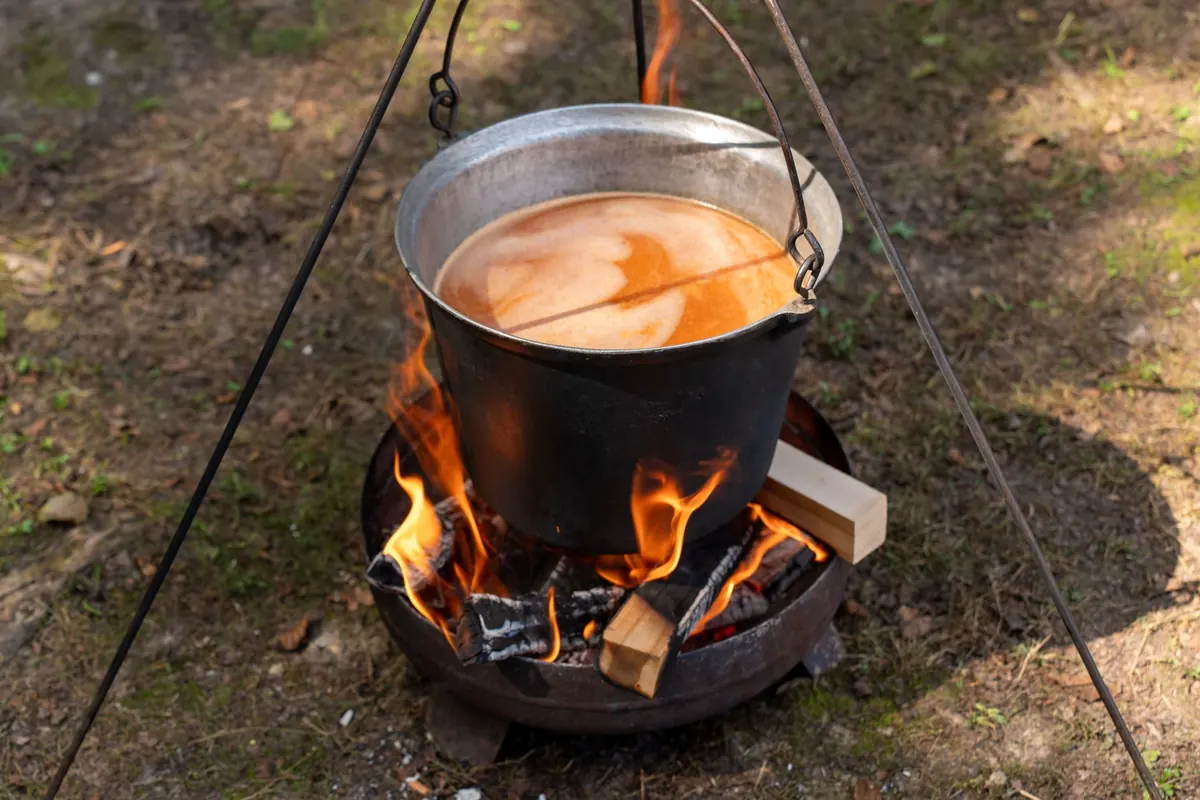
Choose a pot that's big enough to hold the whole meal with room to stir, but not so big it takes forever to heat. For two people, a 2- to 3-quart pot with a tight lid is the sweet spot. A lid matters more than most people expect: it traps heat, shortens cooking time, and keeps ash and pine needles out of your food.
Lighter is better, but thin pots scorch. If you're cooking over real coals rather than a stove, look for a pot with a thick base. Whatever you bring, make sure the handle won't melt and that you have a way to lift it without burning your knuckles.
- Pot with lid — 2–3 quarts for two people
- Pot lifter or heat-resistant gloves — leather work gloves do fine
- Long-handled spoon or spatula — short handles mean singed hair
- Small knife and thin cutting board — a plastic mat weighs almost nothing
- Can opener — if any part of the meal comes in a can
- Small bottle of oil — a few ounces in a leakproof container
- Bowl, mug, and spork — one per person
- Bandana or small towel — for hot handles and messy fingers
- Trash bag — pack out every wrapper, including the greasy ones
- Water — enough for cooking, drinking, and rinsing
2. Fire Safety Comes Before the Recipe
Check the rules for the land you're camping on before you pack the pot. Many mountain areas ban campfires entirely during dry stretches, and some require a fire pan or a designated ring. A stove is a fine backup, and no dinner is worth a wildfire.
Site prep
Use an existing fire ring where one exists. Clear a wide circle of needles, twigs, and grass down to bare mineral soil. Keep the fire small — you need a bed of coals, not a bonfire. Never build a fire under overhanging branches or against a rock that could crack and throw pieces.
Tools and habits
- Lighter plus waterproof matches — two ways to start a fire, always
- Tinder — dry lint, birch bark, or a commercial fire starter
- Water or a shovel within arm's reach — before you strike a match
- Never leave the fire unattended — not for a nap, not for a photo
3. Ingredients That Survive a Backpack
The best one-pot meals are built from things that don't need refrigeration. Dried pasta, instant rice, couscous, orzo, and red lentils all cook fast and weigh little. Lentils and orzo are especially forgiving because they don't turn to paste if you leave them in a minute too long.
For flavor and substance, bring small hard items: bouillon cubes, a tube of tomato paste, a zip bag of dehydrated vegetables, hard cheese, cured sausage, or a tin of fish. Olive oil, garlic powder, smoked paprika, cumin, and a little salt and pepper do more work than a heavy jar of sauce ever will.
A reliable formula
- One starch — pasta, rice, couscous, or lentils
- One protein — cured meat, canned fish, or beans
- Two or three vegetables — dried, fresh, or canned
- One fat — olive oil, butter, or cheese
- Two seasonings — plus salt
If you're carrying raw meat, keep it cold until the moment it goes in the pot and cook it through completely. For anything to do with food safety while camping, when in doubt, throw it out.
4. From Coals to Bowl
Rushing the fire is the most common mistake. A flame is not a cooking surface; coals are. Let the wood burn down for twenty or thirty minutes until you have a glowing bed and flames only at the edges.
- Push coals to one side so you have a hot zone and a cooler zone.
- Set the pot on the hot side, add oil, and toast your aromatics for a minute.
- Add water, stock, and the slowest-cooking ingredients first. Bring to a simmer.
- Add quick items — couscous, cheese, canned fish, delicate greens — near the end.
- Rotate the pot a quarter turn every few minutes if the heat is uneven.
- Pull the pot to the cooler side, lid on, and let it sit five minutes before eating.
Watch the liquid. A campfire runs hotter than a kitchen burner, and a dry pot scorches fast. Keep a little hot water nearby to top it up.
5. Small Things That Save the Meal
Salt the water, not just the finished dish. Taste as you go with a clean spoon — carry a spare so you're not double-dipping into food you're about to share. If the meal turns out bland, a squeeze of lemon, a splash of vinegar, or a handful of sharp cheese will fix it faster than more salt.
Wind is the quiet enemy of campfire cooking. A pot set too high over the coals loses heat on every gust. Lower the pot, or build a small ring of rocks on the windward side to shield the fire.
6. Cleaning Up Without Trashing the Site
Scrape food scraps into your trash bag, not the fire and not the bushes. Food waste attracts animals and leaves a mess for the next camper. Rinse the pot away from water sources — at least a couple hundred feet from any stream or lake — and use as little soap as possible.
Then put the fire out properly: drown it with water, stir the ashes with a stick, drown it again, and check with the back of your hand. If it's too hot to touch, it's too hot to leave. Cold ashes can be scattered, but pack out anything that didn't burn.
7. Practice Once at Home
The trick to a smooth camp dinner is boring: cook it once in your backyard or on a park grill before you take it up a mountain. You'll learn how much water your pot needs, how long your coals take, and whether your knife is sharp enough to matter. Write the amounts on an index card and keep it in the pot.
Pack the night before, not at the trailhead. Lay everything out on the floor, run the meal through your head step by step, and put back anything you didn't actually use. Do that twice and the checklist lives in your head — which is exactly where you want it when the light is fading and dinner is the only thing standing between you and a very good night's sleep.
Photo: Vladimir Srajber / Pexels